The Missing Spark in Your Skillet
A pan sauce can look perfect and still taste strangely quiet. The butter is glossy, the stock has reduced to a savory syrup, and the browned bits from the chicken or steak promise deep flavor. Yet after the first bite, the sauce feels heavy rather than vivid. This is the moment when a small splash of wine, vinegar, or lemon juice can change everything. For cooks building confidence with restaurant-style beurre blanc, acidity is not an afterthought. It is the element that gives richness direction.
The browned residue on the skillet, known as fond, and the rendered fats from cooking form the sauce”s savory backbone. Fond brings roasted, meaty, nutty depth, while butter or olive oil carries that flavor across the tongue. Acidity acts as the dynamic catalyst between them. It loosens the fond, sharpens aromatic perception, stimulates salivation, and keeps rich fat from coating the palate so thoroughly that every bite begins to taste the same. Used with care, acid turns a good reduction into a silky, balanced sauce with the energy of professional cooking.
Deglazing Physics and the Chemistry of Fond
Fond is more than burnt-looking material stuck to the bottom of a pan. During browning, heat drives the Maillard reaction, a complex network of reactions between amino acids and reducing sugars. The result is a concentration of savory compounds, roasted aromas, and caramel-like flavors that cling to the cooking surface. When meat, mushrooms, tofu, or vegetables are seared properly, the fond should be deep golden to chestnut brown, not black. Dark, bitter patches usually signal scorching rather than desirable browning.
Pure water can loosen fond, especially when the pan is still hot, but it is not always the most effective flavor extractor. The browned compounds on the surface include proteins and mineral-rich residues that respond differently to changes in acidity. Wine, vinegar, citrus juice, and stock can penetrate and dissolve those residues while adding their own aromatic character. Acetic acid in vinegar and tartaric acid in wine help release browned material, while the heat of deglazing lifts volatile aroma molecules into the steam rising from the pan. That fragrant burst is not decoration. It is evidence that the pan”s concentrated flavor is becoming part of the sauce.
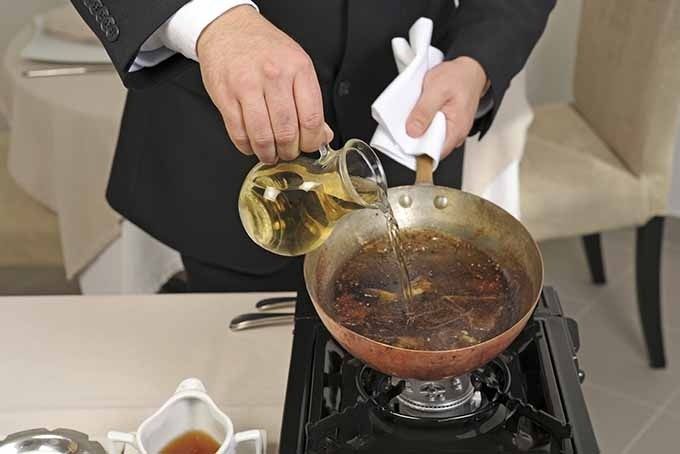
Choose the deglazing liquid according to the food and the final mood of the dish. A dry white wine suits fish, chicken, fennel, and spring vegetables. Red wine works with beef, lamb, mushrooms, and deeply browned onions. Sherry vinegar or balsamic vinegar can bring intensity to pork or roasted vegetables, while lemon juice gives seafood and greens a clean Mediterranean edge. A practical deglazing sequence looks like this:
- Remove the cooked food and inspect the pan for golden or brown fond.
- Pour in the acid-containing liquid while the pan is hot, standing back from the steam.
- Scrape firmly with a wooden spoon or flat spatula to dissolve the browned layer.
- Let the liquid boil briefly so its raw edges soften and its flavor integrates.
Keep the liquid moving across the entire surface. A heavy skillet distributes heat steadily, giving the wine or vinegar enough time to dissolve the fond without scorching. If the pan contains blackened residue, wipe it out before continuing. Acidity can unlock delicious browned flavor, but it cannot transform burnt bitterness into something sweet.
Cutting the Heaviness to Balance Rich Fats
Butterfat creates a luxurious sensation because it coats the mouth and carries fat-soluble aromas. That coating is exactly what makes a pan sauce feel smooth, but it can also mute contrast. Acid provides a crisp counterpoint. It does not remove fat physically; instead, its sour taste and salivary response make the mouth feel refreshed between bites. This is why lemon brightens buttered fish, vinegar wakes up a cream sauce, and a sharp fruit condiment makes roast meat feel less tiring.
Acidity also helps other flavors become more noticeable. A sauce that seems overly salty may need a little acid rather than more water, because a bright note can redirect attention from saltiness and reveal herbs, browned meat, or roasted garlic. Samin Nosrat”s framework of salt, fat, acid, and heat emphasizes this balancing role, especially the mouthwatering effect of properly adjusted acidity, as discussed in this discussion of acid and balance. Add acid gradually, tasting after each addition. The goal is not to make the sauce taste sour. The goal is to make the sauce taste more like itself.
Different acids bring different aromatic personalities. Use the following comparison as a starting point, then adjust for the sweetness, saltiness, and intensity of the rest of the dish.
| Acid | Flavor profile | Best uses |
|---|---|---|
| Lemon juice | Fresh, floral, clean, sharply citrusy | Fish, chicken, greens, beans, butter sauces |
| White wine vinegar | Bright, direct, lightly fruity | Beurre blanc reductions, poultry, delicate vegetables |
| Red wine vinegar | Assertive, fruity, robust | Lamb, beef, lentils, roasted mushrooms |
| Sherry vinegar | Nutty, rounded, complex | Pork, pan-roasted vegetables, hearty reductions |
| Balsamic vinegar | Sweet-tart, dark, concentrated | Duck, pork, onions, tomatoes, autumn vegetables |
| Dry wine | Acidic, aromatic, lightly fruity | Deglazing and building the sauce”s liquid foundation |
Think of acid and fat as partners rather than opponents. Butter softens sharpness, while acid keeps butter from becoming monotonous. A small amount of cream can stabilize a beurre blanc and make it more forgiving, although it also rounds off some of the sauce”s lively edge. For the brightest result, use cold unsalted butter and add it gradually to a properly reduced, acidic base.
Timing the Splash for Maximum Vibrancy
Acid can enter a pan sauce at two distinct stages. A foundational acid, such as wine or vinegar added with shallots, is simmered and reduced. This builds structure, removes harsh alcohol, and concentrates the sauce”s savory and sour elements. A finishing acid, such as fresh lemon juice or a few drops of vinegar, is added near the end. It preserves a more immediate, sparkling character. Many excellent sauces use both: a cooked acidic base for depth and a final bright adjustment for lift.
Heat changes aroma as well as flavor. Lemon juice and fine wine vinegars contain delicate volatile compounds that can fade during prolonged boiling. Extended cooking may leave useful acidity but strip away some of the floral, fresh notes that make the liquid taste lively. Alcohol behaves differently: reducing wine concentrates its flavor while softening the sharp ethanol sensation. Watch the pan closely as the liquid reduces. When the bottom is nearly dry and the remaining mixture looks glossy and syrupy, it is ready for stock, cream, or butter. Add a final squeeze of lemon only after the sauce has cooled slightly, then taste before adding salt.
- Use wine or robust vinegar early when the sauce needs a deep, integrated foundation.
- Use delicate citrus juice late when freshness and aroma matter most.
- Reserve citrus zest for the finishing stage because its essential oils are easily dulled by long cooking.
- Reduce acidic liquids until they taste rounded, never harsh or aggressively alcoholic.
Mastering the Pan Sauce Step by Step
The method is simple, but each stage has a sensory purpose. Begin immediately after removing the cooked ingredient so the skillet remains warm and the fond is ready to dissolve. The pan should be hot enough to make the deglazing liquid hiss, but not so hot that butter, shallots, or vinegar scorch instantly. A pan sauce is usually finished in minutes, making it one of the most efficient ways to turn a weeknight sear into a composed meal.
- Pour off excess grease. Leave behind a thin film of flavorful fat, but remove pools of rendered grease. Too much fat can make the final sauce slick and prevent a stable emulsion. Keep the caramelized fond in place, especially the golden-brown bits that smell nutty and savory.
- Deglaze with wine, citrus, or vinegar. Add the liquid carefully to the hot skillet and scrape every browned patch from the surface. For a gentle sauce, begin with dry white wine or stock plus a small amount of lemon. For a bolder sauce, use red wine, sherry vinegar, or a spoonful of fortified vinegar diluted with stock.
- Simmer aromatics and stock. Add minced shallot, garlic, herbs, or peppercorns, then pour in stock as needed. Reduce until the liquid coats the bottom of the pan and looks lightly syrupy. The aroma should be concentrated but not bitter, and the volume should be low enough that butter will not dilute the sauce into blandness.
- Emulsify cold butter off the flame. Remove the skillet from direct heat and whisk in cold, cubed unsalted butter a piece at a time. Each addition should nearly disappear before the next one goes in. This creates a fine dispersion of butterfat and water, producing a glossy beurre monté-like sheen. If the sauce seems too hot, wait briefly. Excessive heat can split the emulsion; if it is too cool, gentle residual heat will help the butter melt.
Finish with a careful tasting rather than an automatic seasoning step. The sauce may need salt, pepper, lemon, vinegar, chopped parsley, tarragon, capers, or a spoonful of water to loosen its texture. If it tastes heavy, add acid in drops. If it tastes sharp, whisk in another cube of butter or a small splash of stock. A broken sauce can often be rescued by removing it from heat and whisking in a teaspoon of cool water before adding more butter gradually. Serve immediately, because these delicate emulsions are at their silkiest while warm and freshly combined.
Bring Confident Brightness to Every Skillet
The most reliable way to judge acidity is sensory rather than mathematical. Taste the sauce with the food it will accompany, not from a spoon alone. A reduction that seems slightly sharp by itself may be perfectly balanced against a buttery piece of fish or a richly browned pork chop. If the bite feels dull, add a few drops of lemon or vinegar. If the sourness dominates, restore roundness with butter, stock, or a touch of cream. The right balance makes the sauce feel lighter, more aromatic, and more generous without sacrificing richness.
Once the basic method feels natural, explore signature touches. Float a thin citrus wheel in the reduction, finish with orange zest, use a fortified sherry vinegar, or add a few drops of an aged balsamic reduction to roasted vegetables. Fresh herbs, capers, mustard, olives, and pickled chillies can all build on the same acid-fat structure. Every deglazing session becomes an opportunity to understand heat, aroma, texture, and balance more clearly. With one confident splash and a patient whisk, the ordinary skillet becomes a compact laboratory for deeply savory, brilliantly bright cooking.